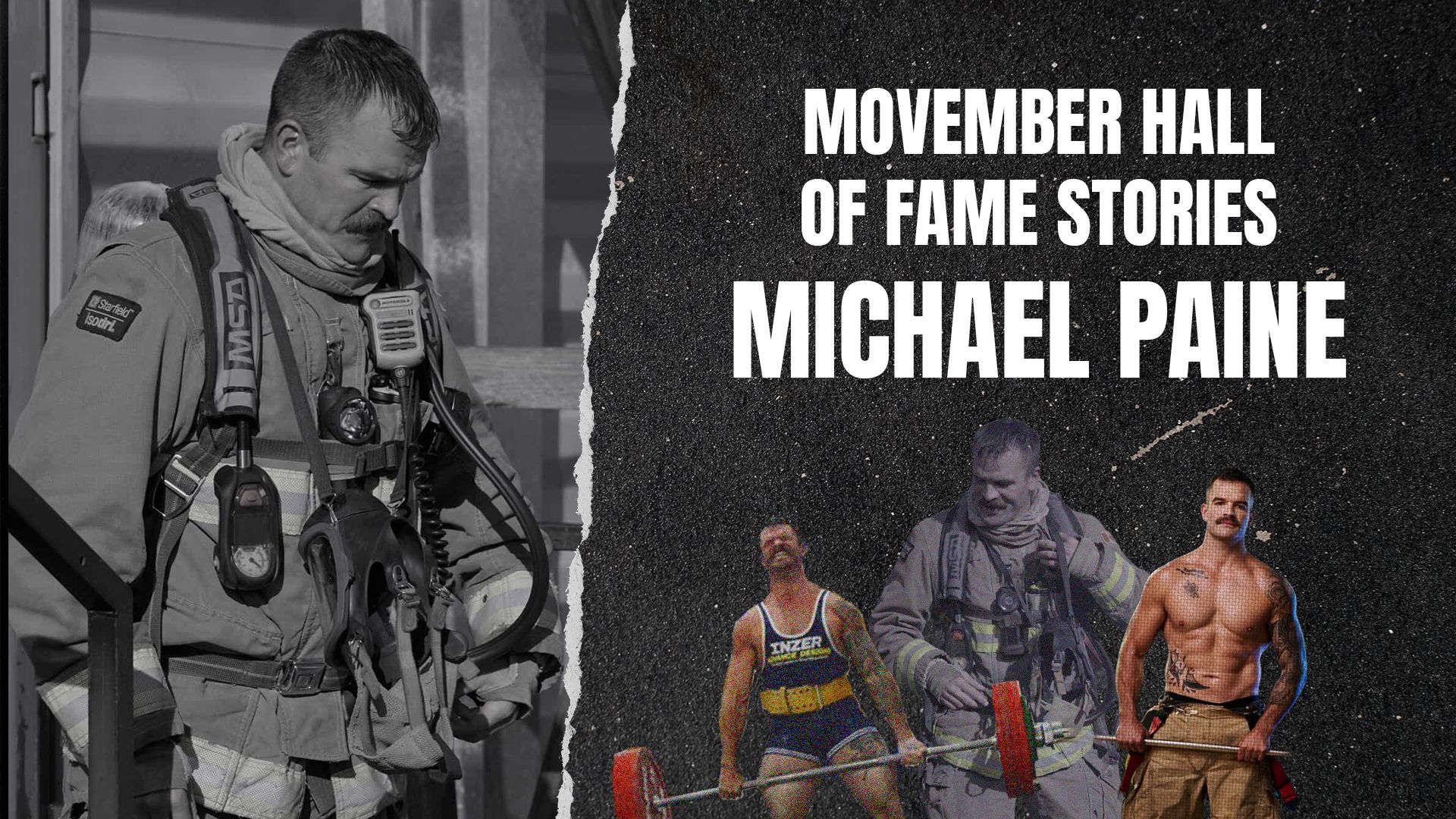
Starting the conversation: Michael Paine’s testicular cancer journey
Based in Vancouver, firefighter Michael Paine was just 27 when a subtle but persistent pain led to his testicular cancer diagnosis back in 2013. Today, Michael is using his experience to break the silence around men’s health by sharing his story, encouraging regular checks, and raising funds for Movember.
A conversation with Michael Paine
Can you take us back to June 2013—what was going on in your life when you first noticed something was different?
Back around July 2013, I was an aspiring career firefighter and about 10 months into my relationship with my girlfriend (now wife) Jenelle. I had been working as a paid call firefighter for the Township of Langley for about three and a half years and working full time at a firefighter supply company called Rocky Mountain Phoenix. In my off time I was playing rugby with my local club.
At the time I noticed something was off, I was on vacation in Maui with Jenelle and I noticed I had a pain coming from my left testicle, nothing crippling but sharp at points in time. Obviously, I did what anyone with a smart phone would do in that situation and checked google, which in turn pointed me in the direction of an infection. I thought it would clear up with some antibiotics.
So when I got home, I booked an appointment with my doctor, he prescribed me antibiotics and booked me a scan because he wanted to make sure I “didn’t go all Lance Armstrong on him.”
Thank god he did. The next day he called me back to his office and told me I had testicular cancer.
What do you remember most about the moment you received your diagnosis?
It was a gut punch; no one really gives you any guidance about how to tackle life altering news like that. I had a cry in the room by myself while my doctor got all my paperwork in order. That helped somewhat by allowing me to gather myself.
Did anything or anyone help you stay positive while going through the experience?
I’m quite lucky in the sense that my family has a really positive outlook on life, so when I told them the news it was more “how are we going to tackle this” and not doom and gloom about it. I didn’t jump to any conclusions right away, but it was hard having the unknown for the first couple weeks after surgery.
How has this experience changed the way you approach your health and life in general?
This whole experience has vastly changed how I look at my job and what I need to do to stay healthy, physically and mentally. I’ve had a couple conversations with other survivors about the mental scars that being diagnosed can have, it’s something that is seldomly talked about but that is very real. I think this whole process has made me more comfortable talking about health and wellness as a whole which helps when November rolls around.
What made you want to start sharing your story with others?
I realized that no one was talking about this! At least not to men my age (at the time I was diagnosed I was 27). It was never on my radar of things to be concerned about and none of my friends or family were either.
At the time of my diagnosis, I was unaware testicular cancer was the most common cancer for men in my age bracket. Once the dust settled, I realized that with my story, I had something that would grab people’s attention and make them start talking amongst themselves.
What advice would you give to someone who has just been diagnosed and is feeling overwhelmed?
There are people to talk to that have been through it, they aren’t alone. Don’t be embarrassed or ashamed. Now that it’s happened, it’s about how you want to attack it.
What do you wish more people understood about testicular cancer?
I think the biggest thing that I wish people knew is that an easy check could spot a potentially cancerous area early. Catching testicular cancer early usually means it needs less treatment
That’s what happened to me in the long run and I’m so grateful that I took the steps to do it.
Why do you think so many young men hesitate to talk about their health?
It’s scary to be vulnerable at a young age. We have gotten better as a whole to be open, but young men still feel the pressure to be strong in all situations. Admitting something is wrong with yourself is akin to admitting defeat.
How did you first get involved with Movember?
I was first introduced to Movember in 2009 when I was backpacking through New Zealand. I was with a pack of Kiwis who gave me the low down on the whole cause and how they grabbed attention. Being 23 and wanting a reason to grow a Mo, I thought this would be awesome. Little did I know how much that decision would come to shape me as a person down the line.
What motivates you to keep supporting Movember years after your diagnosis?
I really believe that the evolving mission that Movember has is really making an impact nationally here in Canada and internationally as well. As I mentioned before, being a firefighter has led me to seeing first-hand how cancer of all kinds can affect men. We [firefighters] suffer from a higher rate of diagnosis and dying from certain types of occupational cancers. More voices are needed in our industry and Movember has allowed me to amplify mine.
Are there any moments from your fundraising or awareness efforts that really stuck with you?
Well, being inducted into the Canadian Movember Hall of Fame is something that I am quite proud of, especially not knowing that it was a thing!
But if I’m truly honest, every year I think this is the year everyone is going to get sick of my shit of posting motivational quotes or dumb photos and every year it seems I get more and more momentum to keep going. It really means, to me anyways, that I am doing something that has meaning.
Testicular cancer is the most common cancer in young men. Get to know what’s normal and what’s not.